
Municipal trunk under Barton Creek crossing
City and Austin Water trunk replacements near creeks require floodplain and bank stability awareness. Microtunneling holds gravity grade for large RCP where HDD tolerance is insufficient.
Austin, TX · Travis County
Microtunneling and TBM for Austin municipal trunks, creek crossings, and large-diameter Austin Water work — engineered where profile tolerance exceeds practical HDD limits.
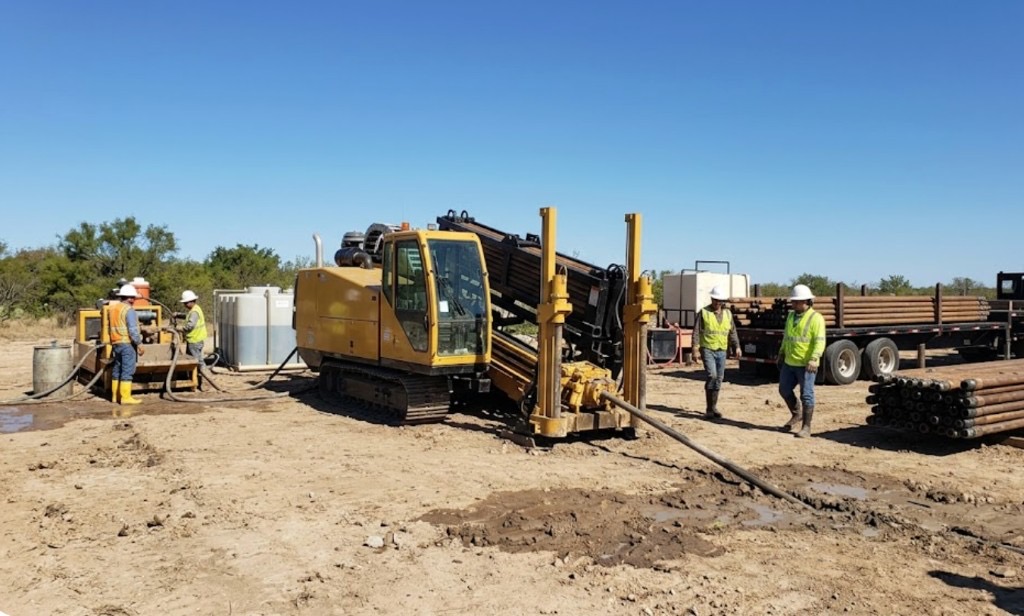
Tunneling and TBM in Austin address large-diameter sanitary trunks, deep collectors, and owner-specified bored installs near Barton Creek, Onion Creek, and I-35 corridor upgrades. Edwards recharge awareness and flash-flood zones add shaft and documentation constraints.
These scopes include shaft shoring, spoils handling, laser-guided line and grade, and Austin Water inspection hold points. Directional Boring Texas quotes tunnel work with Travis geotech, CAPMetro adjacency, and TxDOT permit path.
Real Travis County angles — not generic statewide copy.
City and Austin Water trunk replacements near creeks require floodplain and bank stability awareness. Microtunneling holds gravity grade for large RCP where HDD tolerance is insufficient.
Dense mixed-use combines shallow telecom and electric with deep sanitary collectors. TBM reduces surface disruption across plaza drives — night windows when tenant access requires.
Suburban trunk extensions specify bored installation under arterial crossings already paved. Shaft logistics scoped with Travis County ROW rules.
When diameter and cover exceed practical HDD ream stages, engineered tunnel solutions enter scope. TxDOT Austin District permits start months before shafts.
Shafts are shored for Travis groundwater and limestone. Machine advances on designed line and grade. Spoils removed; pipe jacked per municipal spec. Recharge-zone jobs add fluid documentation; creek-adjacent work pauses when soils are saturated.
Edwards Limestone, Austin Chalk, and iron-rich clay create variable drilling response — especially west and southwest of downtown.
Travis County profiles transition from east-side clay to west-side limestone and chalk. Iron-rich clay can ball up on reamers without proper mud chemistry. Limestone intervals may require harder tooling and slower production. Near the Edwards aquifer recharge zone, fluid loss and bore stability get extra attention — not because HDD is banned, but because documentation and depth control matter to reviewers. Hill Country slopes change pullback loads and require rig positioning planning on tight residential lots.
Flash flooding in Hill Country drainages, drought-hardened soils, and summer heat shape when pits can be opened safely in Austin.
Spring storms can dump inches in hours — creek-adjacent jobs pause when pits flood. Summer drought hardens clay and can increase torque. Winter freezes are infrequent but spike pipe break calls; locates still precede emergency bores.
City of Austin Development Services, Austin Water, Travis County, CAPMetro adjacency, and TxDOT Austin District.
City of Austin permits ROW occupancy, drive cuts, and bore notifications. Austin Water reviews sewer tie-ins. Travis County governs unincorporated areas. TxDOT Austin District handles I-35, MoPac, US-183, and SH-130 crossings. CAPMetro coordination applies near rail. Tree ordinances on protected oaks may affect pit placement even when the bore itself is trenchless — we plan pits to reduce arborist conflicts.
Open trenching across creek parks or Mueller plazas is often untenable. Tunneling costs more upfront but preserves surface use and protected landscapes.
Diameter, length, groundwater, shaft depth, disposal, guidance system, and agency inspection requirements.
We review plans, bore path, access, existing utilities, and owner goals — residential repair or engineered crossing.
Texas dig law compliance: ticket, wait period, verify marks, pothole at conflicts before steel or bit enters ground.
Alignment, profile, soil expectations, permit needs, and crossing agreements for roads, rails, or waterways.
Right rig for length and diameter — mini-HDD for tight urban shots, larger spreads for long pulls and reams.
Steerable pilot, survey checks, reaming passes as required for product pipe or casing diameter.
HDPE fusion, steel casing, conduit bundles, or carrier pipe installed per spec with pullback monitoring.
Alignment records, mandrel or pressure tests where spec requires, as-built for owners and inspectors.
Minimal surface disturbance philosophy — compact entry/exit pits, restore hardscape and landscape per scope.
Large diameters, strict gravity grade, or owner pipe-jacking spec push toward microtunneling.
Shafts are compact versus trench but need city ROW and arborist coordination.
Development Services, Austin Water, Travis County, CAPMetro when adjacent, and TxDOT on state routes.
Yes with bank stability and floodplain compliance. Spring flash floods may shift schedules.
Shaft depth, diameter, geology, spoils disposal, and inspection drive estimates.
24/7 — Emergency dispatch statewide. Tell us your bore path, pipe size, and city — a specialist calls or texts back with a straight answer.
Free bore estimate
Step 1 of 2 — project details first